Which product ad concept should you film?
For a product page selling a clip-on reading light, I’d film the reader who wants one more chapter after their partner falls asleep. In one frame a shopper can see where the light clips, what it lights up and who else is in the room. If the same shop is announcing a new yellow finish to people who already own the light, I’d give it a red-carpet premiere. The choice depends on what the viewer came to find out.
Compare scripts for drama ads against one brief
Imagine pitching three drama ads for the same reading light. You have an evening, a room you can darken and a friend willing to be in the shot. The product page already has a clean photo of the light on white. What’s missing is a view of it in use beside someone who’s asleep. With that in mind, read these three pitches and pick the frame you’d want a shopper to remember.
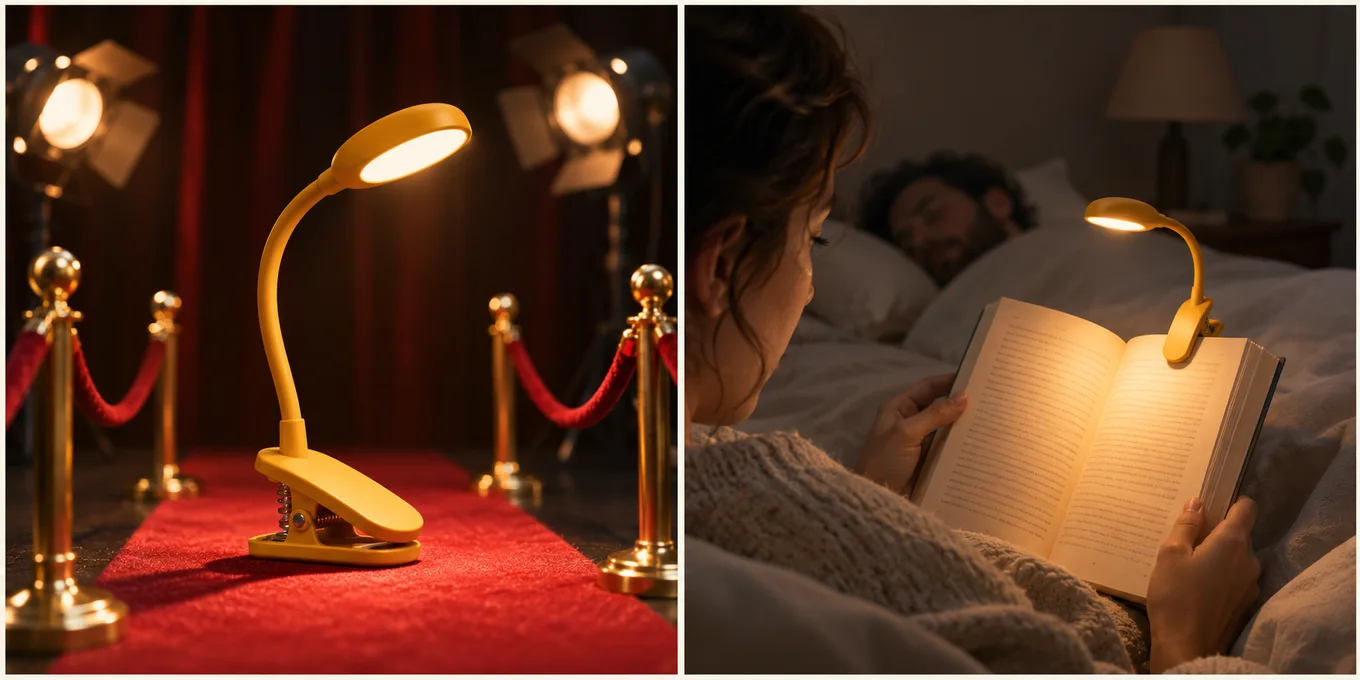
- The premiere. Guests queue for the light’s autograph. Someone holds out a bookmark across a miniature velvet rope. The yellow finish looks splendid under the flashbulbs. The clip stays shut through the whole encounter.
- The interrogation. A detective clips the light to a folder and slides a photograph across the table. A shopper sees how the jaws grip the folder. The pool of light falls on the suspect’s picture, so there’s still a little guesswork about reading a whole page in bed.
- One more chapter. The bedside lamp goes out. A reader clips the little light to a paperback and turns a page. On the next pillow their partner sleeps through the best bit. Both people and the open book fit in the last shot.
Try the shot the idea depends on
Each pitch has one shot you could lose the evening trying to get. For the bedroom, put the real light on a book where you intend to film. Look at the scene through your phone. Can you see the clip and the page, and can you still make out the other pillow? If the partner disappears into a patch of black, move the book or change the angle before you book anyone’s time. Let the actual light show what it does in that room.
The detective version needs a table, a folder and one pair of hands. It’s a good fallback for a solo shoot if the question in your customer messages is how the clip attaches. Open the clip in profile and let the camera see it close around the folder. To answer the bedtime question with the same setup, you’d need to change more than the prop.
For the premiere, lay out a strip of red paper and frame it tightly. A bookmark held out by one hand might do the work of a whole autograph queue. Put your thumb over the yellow lamp in the test frame. If what’s left is still the most interesting part of the picture, move the rope back or come in closer. The skincare bottle on the red carpet is a useful reference for placing the product among its admirers.
Record the reason you chose it
When you compare scripts, read through to the last action. Two pitches can start with the bedside lamp going out. Only the one that comes back to the sleeping partner pays off the reason you picked that setting. Send the person filming a sentence they can use when they have to make a cut.
We’re filming “One more chapter” for first-time buyers. Keep the shot where the reader turns the page and we can still see the person asleep beside them.
That sentence settles a real choice on set. If you have time for either a close-up of the switch or another take with both pillows in frame, you know which one to get. Carry that shot into your three-scene storyboard while you work out the opening and ending.
What do shoppers ask about your product? Keep that question in mind as you compare three scripts in Ad Studio. Pick the one whose last frame would answer it.