How do you write a 15-second ad in three scenes?
Two fingertips wave from behind a tall uncle’s shoulder. Cut down to a folding step stool opening on the floor. Cut back to the family photo just as a third face pops into view. There’s your 15-second ad. You can use the same three beats for other drama ads. The first scene gives someone a problem, the second lets the shopper see the product solve it, and the last shows whether it worked.
Find the two pictures that belong together
Start with the photograph the family wants to take. Everybody fits. Now imagine taking it a moment earlier from exactly the same spot. Somebody’s missing, and the raised fingers are the only clue they were ever in the room. Once you have that pair of pictures, the shot between them has a very specific job. It has to explain how that person got into the photo.
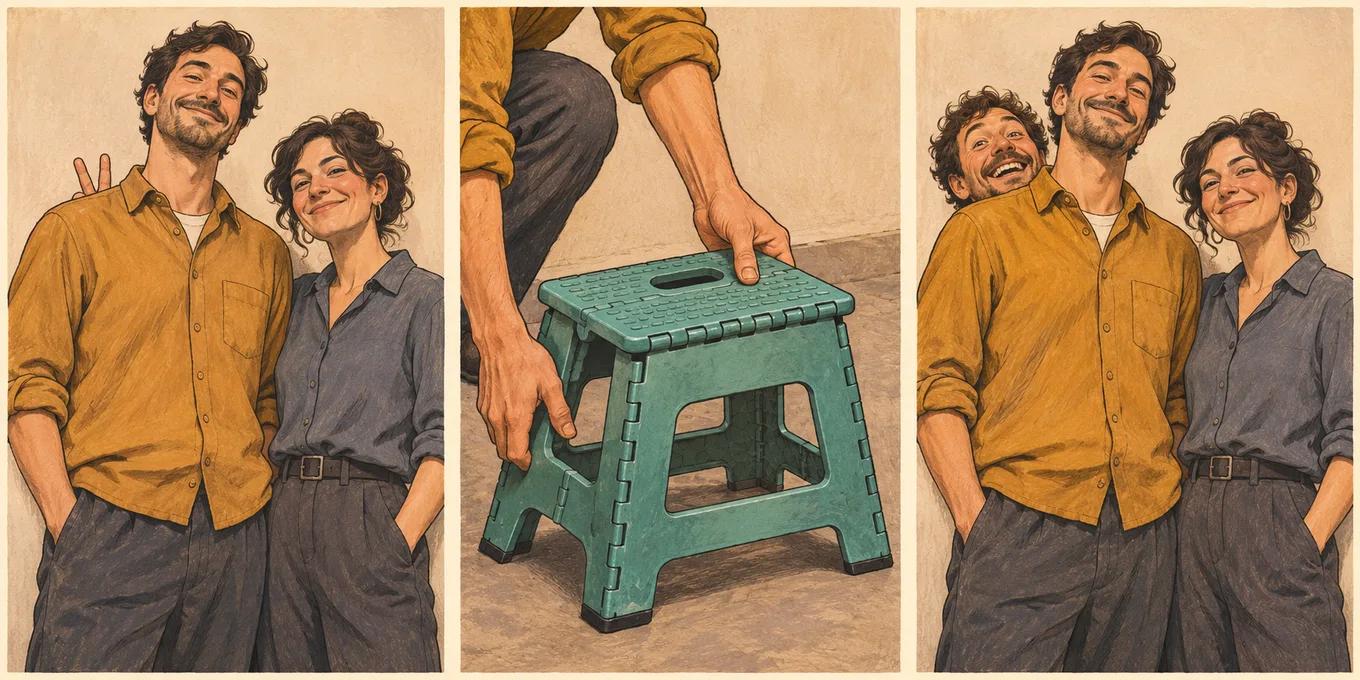
A first draft might open with the family arriving, putting a phone on a tripod and arguing about who gets the middle. Try crossing out all three lines. Those fingertips tell you enough to join the story mid-photo. If you want the pressure of a self-timer, have the people in front hold their smiles a little too long. You can shoot that from the same spot.
How to write drama ads in three shots
Give each shot one line someone can film. Allow five seconds per scene for the first rehearsal. A line can take seconds to read and much longer to do, particularly when someone has to open a folding stool on cue.
- 0–5 seconds. From the phone’s point of view, the family settles into a pose. Two fingers wave beside the tall uncle’s shoulder. Everyone else keeps smiling.
- 5–10 seconds. At floor level, a pair of hands unfolds the stool until the top lies flat. A foot steps onto it. Keep the hinged side facing the camera so the fold is easy to follow.
- 10–15 seconds. Back in the original framing, a face rises into the gap beside the uncle. Everybody looks at the lens. Freeze on the photo they get to keep.
“The stool saves the day” would leave the person filming to invent most of scene two. The line about the hinge tells them which side of the stool to put toward the lens. The freeze in scene three tells them when it’s safe to stop rolling. Those are the kinds of details worth giving space in a short script.
Time the awkward move with the real stool
Stand the phone up vertically and do a rough take of the middle line. Start with the stool folded beside you. Watch the recording from the moment your hand touches it to the moment your foot settles. If most of your five seconds went on reaching down and finding the grip, begin the take with your fingers already in place. Keep the movement that tells a shopper how the thing opens.
Now put the three shots together, even if the family in this version is a row of kitchen chairs. Look for the gap in the first shot, the opening hinge and the new face in the last. If the person simply appears taller, hold the shot of the open stool through the step up. If the final portrait barely flashes before the video ends, trim the family settling into position.
One last check is to play the sequence without the shutter sound. Hold the final photo long enough to find the person who was waving. If you need the click to explain the ending, try the sound-off storyboard test. Once the three lines work, they can go straight into the brief for the person filming.
To try those three beats with your own product, start a storyboard in Ad Studio. Read the opening and closing shots together. What changes for the person in the frame?