How much does it cost to make one usable AI video ad?
For the 15-second coin pouch ad below, the first usable cut costs $24 to make. Two paid retries bring it to $40. Both figures include the shopkeeper’s time. These are worked examples in US dollars, with made-up production rates you can replace with your own. The price quoted by a generator covers only one line of the bill.
Decide which take you could actually run
Picture a Saturday market stall. A buyer has the exact change somewhere in her tote. She fishes out a button and an old bus ticket before a friend holds out a little canvas pouch. The last shot shows a brass zipper closing over the coins. The shop sells this pouch in ochre, and the large pull is the detail customers ask to see.
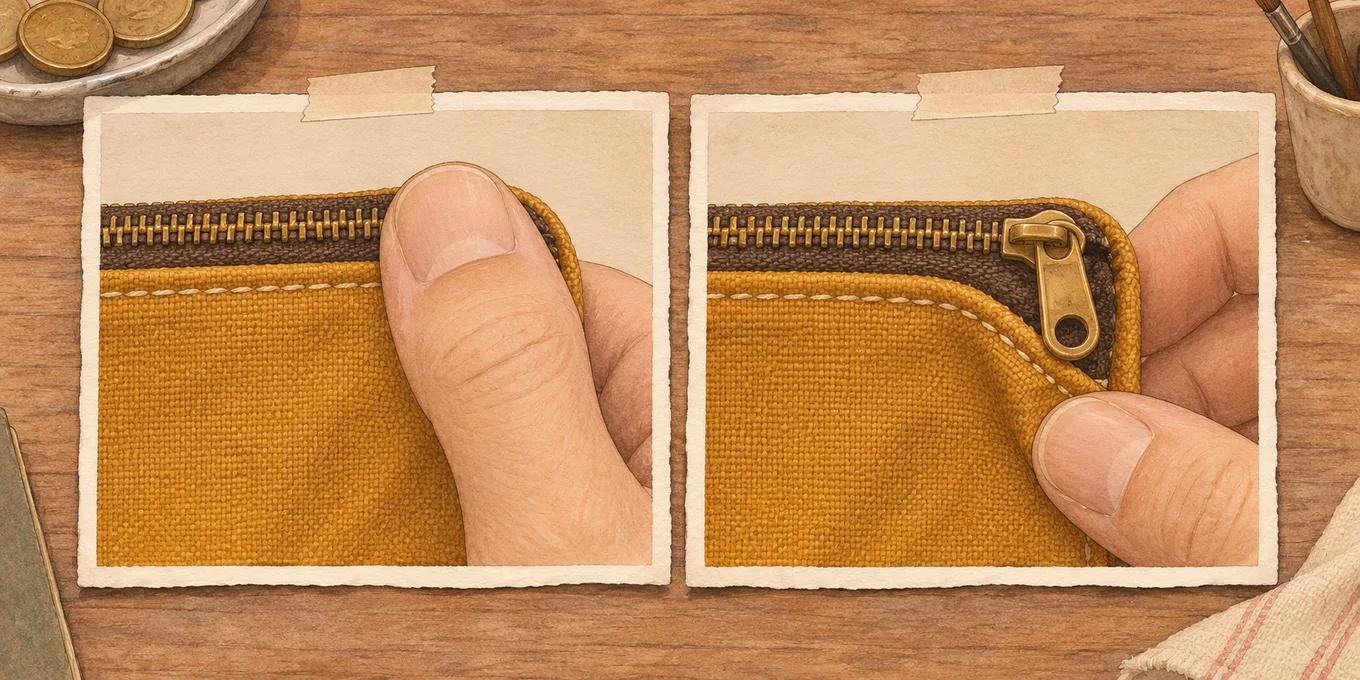
Before generating, write down what the final file needs to earn its place in the campaign. Here the color needs to match the product page, the zipper needs to be visible and the shop invitation needs to fit on a phone. A take that passes those checks can go into the test even if you’d have picked a different bus ticket. A delivered video with the wrong zipper still belongs on the cost sheet.
Put a dollar value on the time between generations
Suppose the owner values an hour of work at $24. She allows 15 minutes to write the brief and choose the photo, then 30 minutes to review the first take, trim it and add captions. Her credit use for that first version comes to $6. For this exercise each additional attempt uses $4 in credits and takes ten more minutes to inspect and cut in.
| Production item | First take works | Two retries |
|---|---|---|
| Brief and photo · 15 min | $6 | $6 |
| First generation | $6 | $6 |
| Review and edit · 30 min | $12 | $12 |
| Extra generations | $0 | $8 |
| Extra editing · 20 min | $0 | $8 |
| Cost of one usable ad | $24 | $40 |
In the second column of dollar amounts, $14 buys generations and $26 pays for 65 minutes of the owner’s work. If you edit while the shop is quiet, you might track only the $14 against this week’s cash budget. Keep the 65 minutes beside it. When you commission three more ads just before a market weekend, those minutes determine whether you need help.
To fill in your credit line, divide what you paid for a pack by the number of credits in it, then multiply by the credits used on this ad. For a subscription bought solely for one campaign, include any paid allowance you leave unused when assessing the campaign’s total cost. DramaAds shows a credit quote for the selected model, length and resolution before generation. Check the current credit options and charging rules when you cost the next attempt.
Price the fix before you buy it
One more try costs this owner $8 including her time. She could also spend ten minutes filming the pouch in daylight with her phone, for $4 of time and no additional credits. Pause where the thumb meets the zipper. If the opening joke works and the hand hides only the pull, she can keep the first part and replace those last seconds. The frame-by-frame product demo example helps locate the shortest section worth replacing.
Work out how many extra orders cover the test
Say the owner chooses the $40 version and puts $20 behind it. The test now costs $60. A $25 order leaves $12 after the pouch, packaging, fees and other per-order costs. At that margin she needs five additional orders to cover the $60. If a discount takes the margin down to $9, she needs seven. Use the margin on the offer shown in the ad and round up to a whole order.
Record the $40 once. If she runs the same cut again next week, the new decision is how much more to spend distributing it. Keep production and media spend on separate lines so a promising second week doesn’t erase what the first one cost. Orders credited by an ad platform can include shoppers who would have bought anyway. Treat five as the break-even target, then use the worked example of comparing ad openings by orders to decide what the early results justify spending next.