How do you test drama ads with the sound off?
Mute the cut, play it once and ask someone what the guest did when dinner arrived. In an imaginary ad for a yellow dish sponge, a waiter lifts a silver dome, the guest whispers “Finally, the house special,” and the film ends. If your viewer can name the sponge but has no idea how the guest took the news, you’ve found the shot to change. Give the guest a decision we can see.
Find the first moment your viewer has to guess
For drama ads with a spoken punchline, try a read-through with someone who hasn’t heard the pitch. Read only what the camera will see. A waiter sets a covered dish on a white tablecloth. A guest leans forward. The cover comes off a yellow sponge. The guest moves their lips. Stop there and let the listener describe the dinner in their own words.
Listen for where the account gets vague. “Something yellow on a plate” puts the problem at the reveal. Try a closer view with the sponge’s scrubby side turned toward the camera, and let the dome clear the frame. “A sponge, and then the guest says something” puts the problem a shot later. A sharper picture of the sponge will do very little for that ending.
Write down the words your viewer actually used. Someone saying “the waiter brought the wrong dish” has followed a perfectly plausible story. Your next shot has to supply the detail that turns a kitchen mix-up into a house special.
Let a pair of hands deliver the line
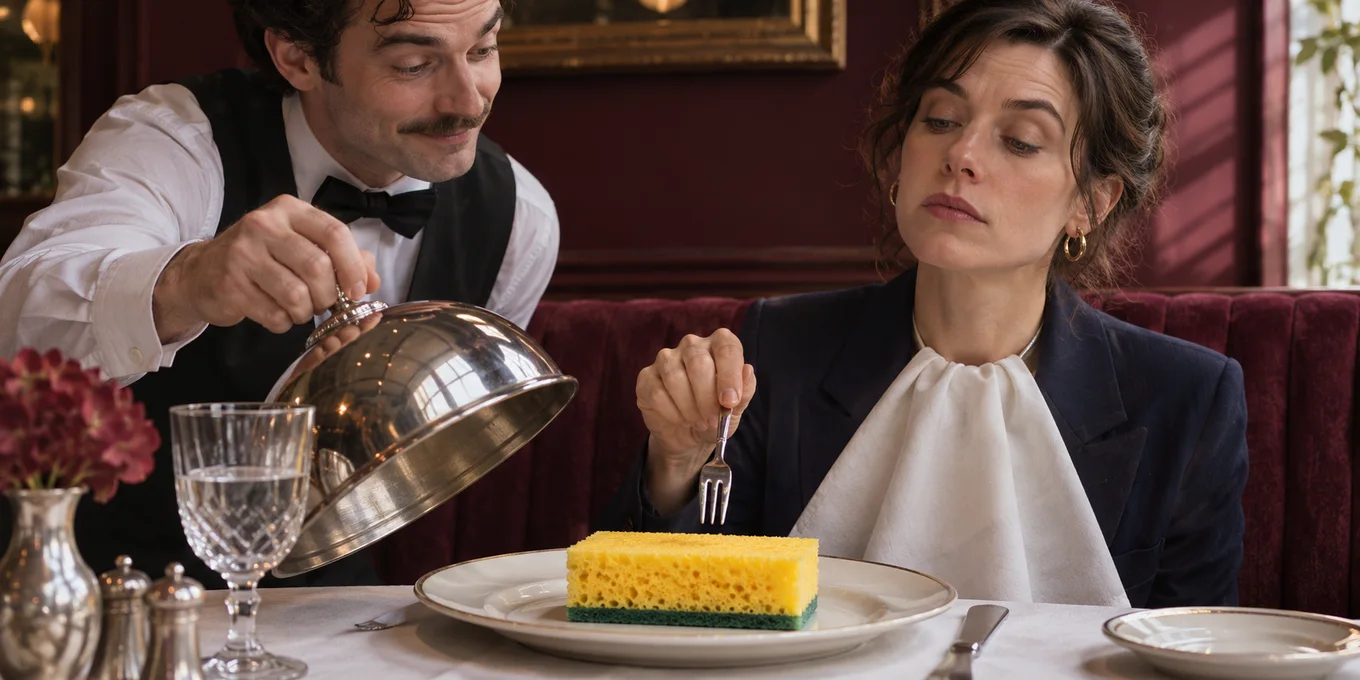
Keep the silver dome. After it lifts, let the guest take a long look at the sponge, tuck a napkin into their collar and solemnly pick up a fork. Cut with the fork poised. The guest has accepted dinner, and we get a moment to appreciate how seriously they’re taking it. The whispered line can still be fun to record.
Try the same sequence with the napkin already tucked and the fork already raised before the reveal. The last picture is almost identical, but now the guest could be waiting for any meal. The order does the storytelling. See the sponge, see the guest consider it, then see the fork come up. Leave enough room between those actions for someone watching on a small screen to follow the guest’s eyes back to the plate.
Look at the three scenes for the red-carpet bottle. The photographers crouch for a better angle and follow when the rope opens. Someone seeing a bottle described as “important” would still have to invent a shot. Someone filming a photographer on one knee already knows where to put the camera.
Watch the rough cut on the phone it’s meant for
Play the vertical cut at normal speed with the volume all the way down. Use the captions you plan to publish if they’re part of the ad. For one extra pass, hide them and look at the guest’s hands. If a caption sits over the fork at the moment it rises, move the caption and replay that moment with it visible. You can keep the line and the gesture.
Show the revised cut to a fresh viewer if you can. Ask what was under the dome and what the guest decided to do about it. “They got a sponge and they were going to eat it” is enough. Nobody needs to guess the wording of the punchline. Put the napkin and the timing of the fork into the shoot brief so the next take keeps the joke you just fixed.
You can rehearse this before filming. Open Ad Studio and choose “Use sample”, then read one script aloud using only the actions a viewer could see. Where would you put the camera for the punchline?