How do I make an AI video ad from one product photo?
One listing photo is enough to start a 15-second ad. Give the product a small job in a story, let AI stage the moment someone needs it, and bring the original photo back for the last shot. If the sale depends on a feature hidden in the photo, plan a short phone clip of that feature. You can make the whole ad without casting anyone.
Start with the question at the counter
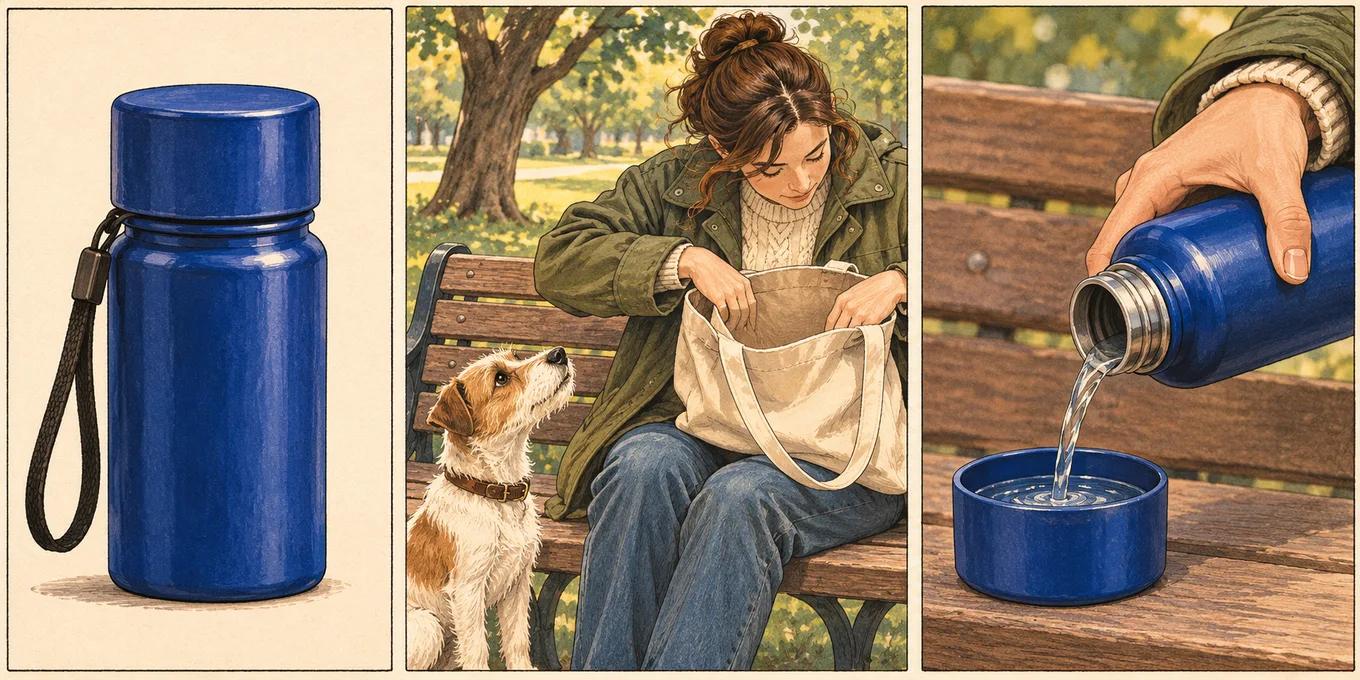
Imagine you sell a blue dog water bottle at a weekend market. A shopper picks it up and asks, “Do I still have to carry a bowl?” You unscrew the wide cap, set it down and pour water into it. There’s your ad. A dog, a park bench and one missing bowl give a stranger scrolling on a phone a reason to watch the same demonstration.
Open the listing photo at phone size. In this example you can see a blue cylinder, a deep cap and a black wrist strap. Keep the uncropped file so the strap and base survive the edit. The inside of the cap is hidden. Mark that on the shot list now. If your photo cuts off an important part, the product reference photo guide shows how to choose a better first view.
Give the generator one scene it can finish
Attach the photo when you start a brief in Ad Studio. Describe what the viewer should notice, where the action happens and what footage you’ll supply. Here’s a brief for this example.
Make a vertical 15-second ad for the blue dog bottle pictured. At a park bench a terrier watches a walker rummage through her tote. She looks down at him and says, “I packed your ball. I forgot your bowl.” Leave room for my close-up of water pouring into the cap. End on my listing photo with the words “Shop the travel bottle.”
Read the proposed script with your thumb over the product photo. If the walker spends the opening explaining how much she loves the bottle, give her the tennis ball instead. She can pull it out of the bag, meet the dog’s eye and deliver the line. The ball explains the mix-up even with the phone muted.
Cut the three shots on a phone
- 0–5 seconds · The missing bowl. Generate the bench scene. Frame the tote and dog together so viewers see who’s waiting. Keep the take where the walker finds the ball and looks at the dog. Trim any extra rummaging after that look.
- 5–11 seconds · The pour. Set the real cap on a flat surface. Hold the phone upright or prop it against a mug. Start recording before the bottle enters the frame, then pour slowly enough to see the water collect. Leave a beat on the filled cap. Only your hands need to appear.
- 11–15 seconds · The item for sale. Drop the original listing photo into your vertical edit. Leave space around the wrist strap, add the shop invitation and hold the frame long enough to read it aloud. Link the ad to this bottle in the pictured color.
You can assemble these in a phone editor by placing the clips end to end, muting the recorded room noise and adding the walker’s line as a caption. If the dialogue runs long, shorten the line before taking time away from the pour. The 15-second storyboard example shows how to time a product reveal against the opening joke.
If that photo is all you have today
Suppose the sample is at your market stall and you’re editing at home. You can still finish a simpler version. Change the walker’s line to “Ball, lead … water?” Let her spot the familiar blue bottle in her open tote, then cut straight to the original photo. Drop the bowl claim and end with “Pack the travel bottle.” That version sells the idea of remembering water. Save the cap demonstration for the day you can film it.
Play the cut once for someone who hasn’t seen the bottle. For the version with the pour, ask “What does the dog drink from?” If they say “a little bowl she brought along,” move the start of the close-up back to the moment the cap comes off. An extra second showing where the bowl came from can answer the question that started the ad.