How can I use an AI actor in a TikTok ad without faking a customer review?
Give the AI actor a part in a scene a shopper can recognize as fiction. A dog walker calling through an open door, “Did you pack his bowl?” gives your ad a reason to exist. Turn the same actor toward the camera and have her say, “I bought this bottle three months ago,” and a shopper has good reason to believe a customer is speaking. For a small shop with a new bottle to sell, the first line already does the job.
Listen for the part of the line that needs a real customer
Imagine a pet shop making its first paid TikTok ad. Its travel bottle has a wide cap that doubles as a drinking cup. Someone drafting the script suggests this opening for an AI character holding a lead.
“I bought this for Milo three months ago. We take it on every walk.”
Underline the purchase, the three months and the repeated walks. Each is a piece of someone’s history. Giving the dog a name makes the account more persuasive, but where did those details come from? In this example the shop made them up. Even if the bottle works exactly as shown, there’s no customer behind that story.
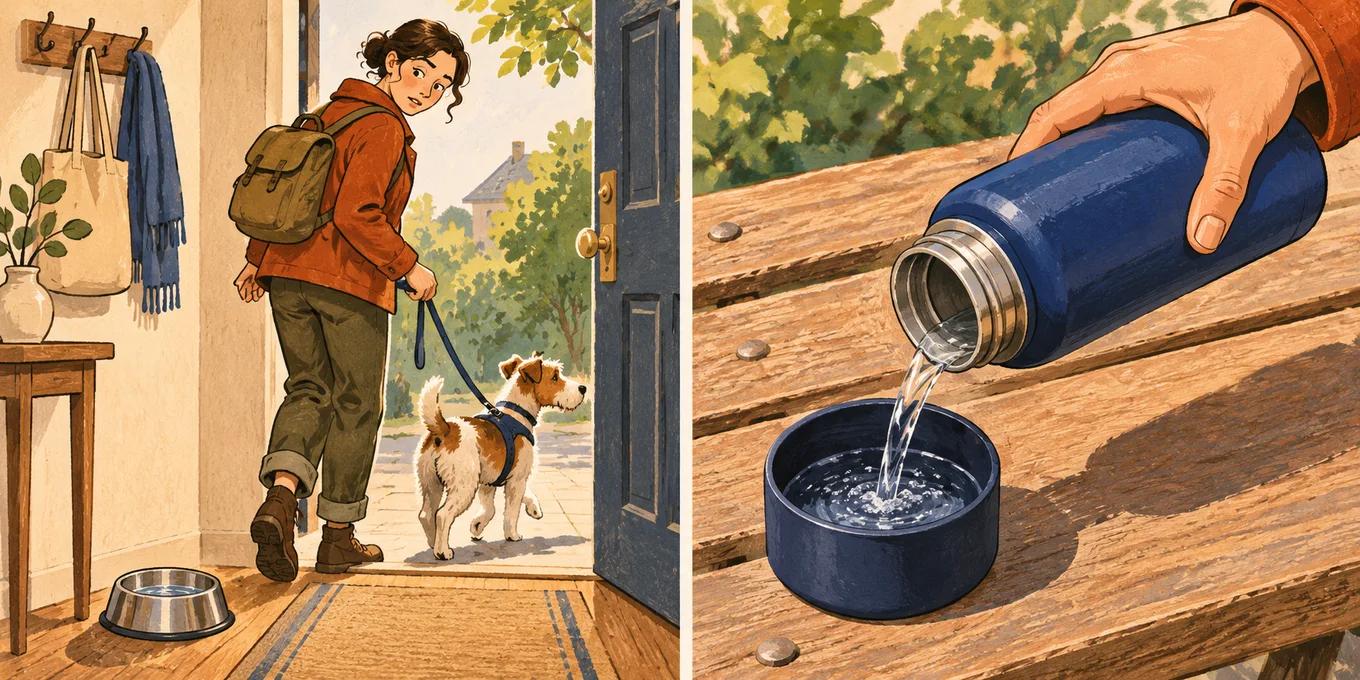
Keep Milo. Give the walker a line she can say entirely in the moment. “Milo, how did we bring three tennis balls and forget your bowl?” Let one ball roll out of the tote, then a second. Now the shopper knows what went wrong and wants to see how the walker solves it. A tennis ball rolling back through the doorway gives the actor more to play than a paragraph of praise.
Give the shop one claim it can demonstrate
Cut from the walker’s predicament to a close-up of your hands removing the cap, setting it down and filling it. Keep the bottle and cap together in frame long enough to see where the cup came from. The caption can be as simple as “The cap doubles as a drinking cup.” A shopper can check every word against what just happened. A successful pour tells them little about whether the bottle will leak on a two-hour hike, so leave that promise out of this cut.
Look at the graphics around the actor as well. A five-star strip, a “verified buyer” badge or a caption styled like a screenshot from the shop’s reviews can turn a perfectly ordinary line into an apparent endorsement. Put the shop name on the closing product shot and let the opening look like a scene. For a shot list you can adapt, see how to build the bottle ad from a listing photo.
For ads aimed at US shoppers, the FTC discusses both obviously fictional commercials and AI avatars. Its guidance asks whether viewers would understand a message as someone’s experience and whether the underlying account is genuine. If a real buyer later sends you a good line, keep their original wording and context, ask permission to use it, and make clear who supplied the words and who appears on screen. The FTC’s answers on actors and consumer testimonials cover that distinction.
Disclose the AI scene in the TikTok placement you use
The walker in this example is AI-generated even if you film every drop of water yourself. TikTok’s advertising policy calls for disclosure on AI-generated or significantly edited media and describes its AI label and clear on-creative disclosures. Review the policy on edited media and AI-generated ad content when preparing the upload.
For this standard, non-Spark TikTok ad, turn on This ad contains AI-generated content during ad creation in Ads Manager. If you promote an existing post as a Spark Ad, follow the AI disclosure instructions for the organic post. TikTok documents both paths in its ad disclosure instructions. That label tells people how the walker was made. A statement about three months of ownership would still need a customer who actually owned the bottle.
Ask someone who they just heard from
Play the phone preview for someone who hasn’t read the script. Ask, “Who was the walker?” and “What did you see the bottle do?” An answer like “someone in the shop’s skit, and the lid held water” tells you the two shots did their jobs. If the viewer remembers a happy buyer recommending her purchase, ask which words or graphic gave that impression. Change that detail, then play the cut once with the sound off. Shoppers who miss the dialogue should still be able to tell who is selling the bottle and what the cap does.